

Maison Gacha
© Hilel GhozziMaison Gacha has its roots in the Jean-Félicien Gacha Foundation, located in Bangoulap, in western Cameroon. Dedicated to promoting crafts and tangible and intangible heritage from Africa and elsewhere, it is a vibrant cultural space that preserves, celebrates, creates, publishes and exhibits.
In Paris, Maison Gacha is home to a distinctive collection of African arts — the Gacha-Dumas Collection — and develops programming that puts works from the collection in dialogue with traditional craftsmanship and contemporary creation. It shares craft gestures and knowledge through workshops and conferences. It also supports research and creation through exhibitions, residencies, publications and off-site projects. This approach is rooted in a commitment to intercultural exchange and the flow of knowledge.
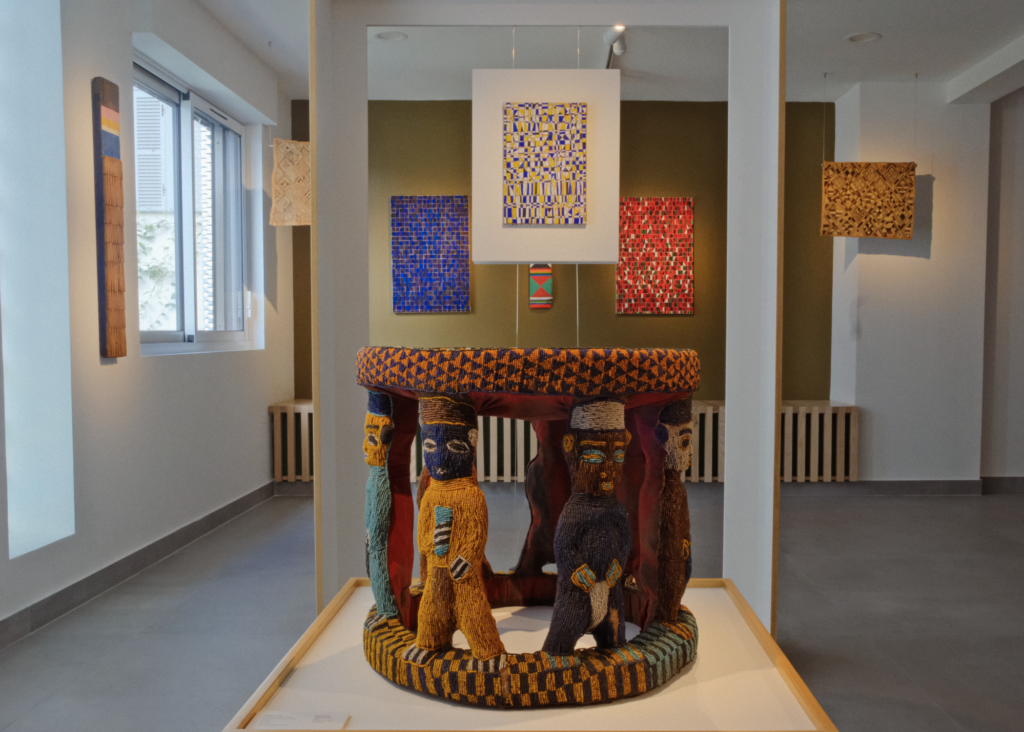
The programme illustrates this ambition to build bridges between cultures, periods and practices. In spring 2026, the exhibition Gonçalo Ivo – Fenêtre sur l’Afrique brought together works by the Brazilian artist with textiles, sculptures and adornments presented by Maison Gacha. Colour, rhythm, form and material interwove contemporary abstraction, African arts and Brazilian imaginaries. On view through summer 2026, the exhibition was accompanied by workshops, guided tours and educational outreach for school groups.
The autumn 2026 programme continues this approach with Ndop, filer le bleu pour raconter un monde, an exhibition devoted to the traditional textile of western Cameroon. From the spinning of cotton in the north of the country to the indigo bath that reveals its white resist-dyed patterns, the exhibition follows the journey of a textile whose making brings together hands from across Cameroon. It then explores its uses, symbols and contemporary interpretations. Monumental ceremonial hangings, a complete costume associated with an initiatory society, beaded thrones, archival photographs and contemporary works from the Gacha-Dumas Collection meet the work of artists and artisans who keep the craft alive. On view from 21 October 2026 to 27 February 2027, the exhibition is accompanied by a publication — Le Journal du ndop — bringing together contributions from researchers, artists and artisans, as well as guided tours and workshops in dyeing, raffia embroidery and costume-making.